Sunday, February 15, 2015

Famous Black Firsts: Williams Wells Brown

Williams Wells Brown who was born in 1814 was the first Black man to have novel published titled Clotel. In Montgomery, Kentucky he was born a slave to a mother that was also a slave. If you are wondering why his hair is so slick, its because he and his six brothers and sisters were fathered by the cousin of their master. He and his mother were sold to other owners despite his master and cousin making a deal not to. He was sold multiple times before he was 20 years old. He and his mother escaped slavery two times, the second time being successful. At the age of 20 he met his wife and had two daughters. In 1849 he left for England while estranged from his wife who passed away. That same year he was chosen as the representative of the US at the International Peace Congress in Paris. 

After his freedom was bought in 1854 he and his daughters were able to return to the US. A side note: his daughter Josephine Brown is arguably the first Black female to have a book published. While in the US Brown settled in Buffalo, New York. There he helped slaves escape by hiding them on steamboats which he worked on in his youth as a slave. The number the estimate from Brown alone is 69 which sounds kind of low, but not when you think of how many hundreds or thousands of us are alive today or in the past because of him.

Click here for previous Famous Black Firsts.  

Saturday, February 14, 2015

Famous Black Firsts: University Professor Charles Lewis Reason

Charles Lewis Reason was born on July 21st 1818 in New York. Both of his parents were free. He was a mathematician and educator and became the first Black to become a professor at a mostly White college, New York Central College in McGrawville. In 1847 he and Charles Bennett Ray founded the Society for the Promotion of Education for Black children. A few years later he was made professor of belles letters Greek, Latin, and French while also working as a professor of mathematics. Reason later worked in public schools as a reformer, teacher, and administrator. 

In 1873 he helped fight for and got the statute to integrate Black students into public schools. After this he became principal of Grammar School No. 80. New York has such weird names for their school. After suffering two strokes within five years he still continued working. He passed away five months after retiring. Reason also wrote poetry, was an activist, and abolitionist.

Click here for previous Famous Black Firsts.

Friday, February 13, 2015

Famous Black Firsts: Academy Award Winner Hattie McDaniel

Hattie McDaniel was born on June 10th, 1895 to former slaves in Wichita, Kansas. She was the youngest of 13 children as well. Yeesh. Growing up she performed with her brothers and sisters who also sang and did shows. At one point even though she was performing on well known and popular radio shows she still had to support herself by being a maid. She is best known for playing the character Mammy in Gone With The Wind but it turns out that she was in over 300 movies but only credited for 80. 

She also performed on stage, television, radio, and did comedy. Besides being the first Black person to win an Academy Award in 1940 (Best Supporting Actress) she was also the first Black woman to sing on the radio. I did not know that. She was also the first Black Academy Award winner to appear on a stamp back in 2006 and has two stars on the Walk of Fame. One for movies and the other for radio. When she was given the award she was criticized by some for the roles that she accepted. They wanted her to make a statement. She just wanted to act and make a living. “Why should I complain about making $700 a week playing a maid? If I didn't, I'd be making $7 a week being one.” 

Thursday, February 12, 2015

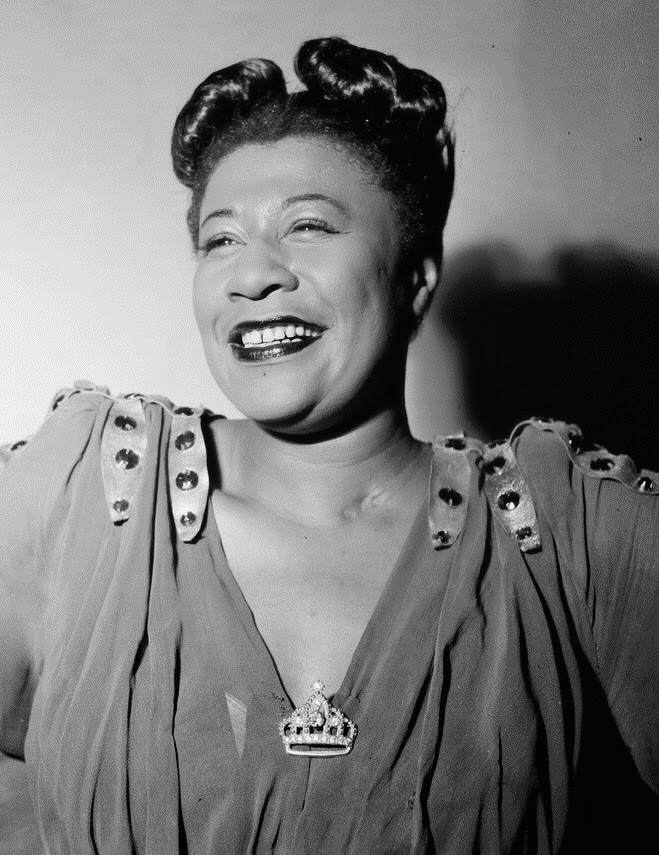
Famous Black Firsts: Grammy Award Winner Ella Fitzgerald

Born on April 25th, 1917 Ella Fitzgerald was the first Black female to win a Grammy Award, two of them the first year it was even a thing to win. Within the 60 years that she spent recording music she won a total of 13 Grammy's and sold 40 million copies of over 70 albums. She was born in Newport News, Virginia to unmarried parents that separated within a year of her being born. Her mother got with another guy and they moved to New York as part of the Great Migration. At the age of 6 Ella began attending school. As a child she loved dancing and would perform for her family and students in school. After the death of her mother while Ella was still a teen, her grades dropped in school and she began ditching. 

After leaving home due to her abusive stepfather she worked as a look out at a brothel. After police found her she was placed in an orphanage and then a reformatory for girls. He eventually escaped and began singing at the age of 17, making her debut at the Apollo Theater. She was going to dance during Amateur Night but decided to sing after being intimated by a local dancing duo. She won the first prize of a whopping $25. That was a lot back then. She was discovered singing for pennies by someone in the industry and his manager was reluctant to bring in a homeless teen singer until he heard her sing. Ella performed with Benny Goodman and his orchestra even after his death as well as having her own side projects. In 1942 she debuted in a Abbott & Costello movie Ride 'Em Cowboy. Due to her undeniable talent, by the 1950's and 60's she was dubbed The First Lady Of Song. I had heard of Ella growing up from various sources and when listening to some of her songs I totally recognized her voice and even imitations of it from old cartoons I watched growing up. She passed away in 1996 after a series of debilitating illnesses at home.

Click here for previous Famous Black Firsts.

Wednesday, February 11, 2015

Dante Saves You: Bank Heist Edition


I know it has been a while since I tried to save you all. This time I am gonna teach you how to survive a bank heist in this Dante Saves You: Bank Heist Edition. I'm not gonna teach you how to survive being robbed. Nope. I am gonna teach you how to survive being on the other side of the law.

Let's say you have decided to rob a bank. There are many reasons why you'd make this dumb decision. If you really wanna rob people go into real estate. You are gonna need a team and getting a team is hard. Think of about four other people that you think could keep any secret. Hard, isn't it? Now try to think of that many that you could successfully pull off a robbery with. Even harder. But have no fear. That is why I am here to teach you how to survive this nonsense.

After The Float (Deprivation Tank)


So today I went to Float Lab in Venice, CA. I know I said I was going to the Westwood location but it turns out that they have not opened yet. Stupid internet. Click here for why I wanted to do this. Thankfully I called to double check things and found out the correct location to go to. Being fully aware that people hate reading here is a fast version of what it was like.

Look: Giant metal box with huge tanks of various gasses, liquids, and such to operate the deprivation tank. Also, it is blacker than Don Cheadle on Crenshaw in 1992.

Sound: Your own breathing, pulse, and sometimes the tank itself.

Taste: Bionic levels of salt if it gets in your mouth which it did after I showered.

Touch: I want to say wet but that doesn't even make sense since the water is your own temperature. It feels like you are just floating on nothing.

Overall: I would suggest anyone that wants peace and quiet, has joint pains, or wants to see weird shit.

Famous Black Firsts: Boston Police Horatio Julius Homer

There isn't a lot of information about today's FBF, Horatio Julius Homer. He grew up on a farm in Farmington, Connecticut. In 1873 he worked in a shoe factory and then a steamship in Boston. By 1878 he was assigned as a patrolman. Now, I have never been to Boston. Have no desire to go to Boston. But what I do know about Boston is that I do not like their accents and that there is a lot of racism there. So the fact that Homer became the first Black police officer in Boston that long ago is pretty damned incredible. By 1895 he was made a sergeant. 

Over a 40 year career he worked for about a dozen commissioners. It is said that he like Greek literature, was a Republican, and memorized a poem each day. The main reason any of this information about him is even known is because in 2010 Margaret Sullivan, a Boston police archivist, and Bob Anthony an officer in East Boston did the homework. After that, his unmarked grave was finally treated with proper respect.

Click here for previous Famous Black Firsts.
Tuesday, February 10, 2015

Famous Black Firsts: First Published Phillis Wheatley

Phillis Wheatley is someone that I have heard of when in school as far as being told that she was a poet. She was also the first Black woman to have a book published. Can't recall having to read anything that she wrote. Just knew that she was Black, a woman, and wrote. She was born in 1753 but that is a guesstimate. There are so many things about her life before she was bought as a slave. They think she was 7 years old when she was purchased by the Wheatley family which is where she got her name. Yes, that is how Black people got their names back in the day. Named after who owned us. USA! USA! USA! 

Anyhoot, she was given the name Phillis because, I'm not kidding, that was what the ship that she was brought from Africa was called. She was thankfully taught to read and write by the daughter and son of the family that owned her. By the age of 12 Phillis was reading Greek and Latin. She was so good that they let all the other slaves do the household work. She was taken to London where she began to spread her work and by the age of 25 she was freed from being a slave as according to the will of her now dead master. This sounds like a story. Three months later she married and had two children that died as infants. She continued to write even though she could not afford to have her work published. After the imprisonment of her husband she had to now do the work she was able to avoid while growing up. She died at the age of 31 and hours later so did her child. Wow. I think I know why I never heard the full story of her life in school. This is depressing.

Click here for previous Famous Black Firsts.  

Monday, February 9, 2015

Famous Black Firsts: First Black Comic Book Artist Matt Baker

Clarence Matthew Baker also known as Matt Baker was born on December 10th, 1921 in Forsyth County, North Caroline. As a child his family moved to Pittsburgh. After high school he was drafted during World War 2 but a heart condition prevented him from being in it. He began studying art in New York City and became an outsourced comic book artist. What that means is that he was commissioned to do at from one particular person, kinda like an agent, and sent his work in. 

The first of his work that is actually confirmed is from a “Sheena Queen of the Jungle” story in 1944. He drew for many different comic book companies using the name Matt Bakerino before settling with Atlas Comics which eventually became Marvel Comics. He became the first Black comic book artist. With his art he drew Westerns, science fiction, and romance comics. He passed away from a heart attack at the age of 37. In 2009 he was inducted into the Will Eisner Comic Book Hall of Fame. As someone that draws till this day and started when I was about 4 years old it would've been cool to know about this guy during Black History Month growing up.

Click here for previous Famous Black Firsts.

Sunday, February 8, 2015

Famous Black Firsts: First Commissioned Officer Henry Ossian Flipper

Henry Ossian Flipper was born on March 21st, 1856. He was the oldest of five brothers. Both of his parents were owned by a slave dealer. During Reconstruction he attended Atlanta University where he was encouraged to head to West Point. He and the other four Black students there were not exactly welcomed, but he got through it and became the first Black graduate of West Point. He earned a commission as a second lieutenant of the US Army cavalry. He then became the first Black officer to command troops in the Army. 

In 1881 was under the command of an Colonel that tolerated Black soldiers but hated seeing one that was an officer. Soon Flipper was asked to keep a location safe and realized that $2,000 was missing. He tried to cover this up knowing it could be used against him but was found out. He was arrested for embezzling government funds. He was eventually found innocent during a court martial but found guilty of, get this, “of conduct unbecoming an officer and gentleman” and dismissed from the military. Could you imagine knowing that you were set up for some dirty stuff like this and no one believing you after making a career in the military? Two other officers were guilty of embezzlement but neither were discharged because they were White. Flipper spent the rest of his life attempting to get this charge dismissed. He ended up working in Latin America as an assistant to the Secretary of the Interior before retiring in 1931. He died in 1940. In 1994 his family asked the military to review his court martial. They found the punishment and conviction harsher than it should've been. In February of 1999 Bill Clinton pardoned Flipper.

Click here for previous Famous Black Firsts.  

Saturday, February 7, 2015

Famous Black Firsts: First Female Principal Fanny Jackson Coppin

Fanny Jackson Coppin was born on January 8th, 1837. Her freedom was bought by an aunt when she was 12 years old. Let that sink in for a moment. She spent the rest of her young years working as a servant for an author and studying when she could. In 1860 she got into Oberlin College in Ohio which was the first college in the US to accept Black make and female students. Yeah. She had to deal with being Black as well as a woman back then. While studying as a student she taught reading and writing to Black students before graduating with a Bachelor's degree. 

Afterward she got a position at Philadelphia's Institute for Colored Youth and it was here where she became the first Black female school principal. She was promoted to the board of education to superintendent making her the first Black superintendent of a school in America but eventually went back to being a principal. She eventually married a reverend and in 1902 they headed to South Africa for missionary work. After about ten years her health forced here to come back to Philadelphia. Crazy how whenever I had female principals it just seemed totally normal. I never stopped to think that someone had to be the first one as well as the first Black one.

Click here for previous Famous Black Firsts.  

Friday, February 6, 2015

Meet Four Of The Worst People On Earth

I like when you can get four dumb ass people off the street at once. I don't like when the reason that they have been removed from the streets is because they did something fucked up to a kid. Four adults, relatives of the 6 year old in question, were arrested after staging a kidnapping to teach him the dangers of talking to strangers. This all took place in Troy, Missouri. Nathan Wynn Firoved, 23, was asked by the boys aunt and his coworker, 38 year old Denise Kroutil, to kidnap the kid and scare him because he was “too nice” to people. By the time this is all said and done that will never be an issue again. 

Firoved tricked the boy into his truck while he was walking home on Monday and when the boy got into the truck he told him that he would “never see his mommy again.” Just to spice things up a bit he also told him that he would be “nailed to the wall of a shed.” The boy started crying because, you know, death threats, so Firoved showed him his gun and threatened to hurt him. He eventually covered the boys hands and feet then covered up his face while driving him around. He was taken into the basement of his home, which he didn't know was his home because his face was covered. One of his family members then took the boys pants off and told him that he was going to be sold into sex slavery. After some time the family untied him and told him about Stranger Danger.

Famous Black Firsts: Judge Macon Bolling Allen

Macon Bolling Allen was born on August 4th, 1816 and was the first Black that was license to practice law and to hold a judicial position here in America. He was born free and taught himself how to read and write growing up. His first job was as a teacher. Every sentence I just wrote is shocking considering what time period that was. After moving to Maine in the 1840's he began to study law and worked as a law clerk. After passing the bar exam he was given a license to practice law but couldn't really find any work since there were so few Blacks living in Maine at the time and White people were not having any of that. 

In 1845 he moved to Boston and after walking 50 miles to the bar exam testing site he passed the exam. The reason he walked so far was because he couldn't afford transportation. After having trouble making a living being a lawyer for a bunch of racists he decided to become a judge to make money. By 1848 he became a Justice of the Peace for Middlesex County. Mind you, at the time he was not even considered a US citizen yet he was now officially a judge. After the American Civil War he moved to South Carolina and opened a law office where within two years he went from being a judge in the Inferior Court to probate judge for Charleston County. He kept on practicing law until he died at the age of 78.

Click here for previous Famous Black Firsts.  

Thursday, February 5, 2015

Famous Black Firsts: First Black Female To Enlist Cathay Williams

Born in 1844 Cathay Williams was the daughter of a free man from Missouri and a slave which meant for all intents and purposes, legally she was a slave. Yeah. I know. During the American Civil War captured slaves were considered contraband so they were forced to serve in the military as cooks and nurses. 

Cathay joined the Union army at the age of 17 by pretending to be a man named William Cathay. This means that Cathay was not only the first Black female to enlist as an American Soldier, but that she is the only one documented to have posed as a man and get in. She served in the 8th Indiana Volunteer Infantry Regiment. Too many words.

After being present in multiple battles when the war ended she still wanted to continue. She joined the Regular Army and passed herself off as a man for three more years. It is said that only two other people knew her secret: a cousin and a friend who were also soldiers alongside her. After getting smallpox, I say it as if its a present, she was finally discovered by a doctor who snitched. She was discharged in 1868. Afterward she worked as a cook in New Mexico and then while living in Pueblo, Colorado her husband stole all her money and horses. She had his ass arrested and moved again working as a seamstress. By 1876 the story of her service got around but did her little to no good as by 1890 she got sick and could not get any disability help. A couple of other women had done what she did but they were White and got help from famous friends. No one is sure exactly when she died but they guesstimate around 1892 and no one knows where she is buried because Black. This woman was a champion of champions and schools should be ashamed that she was never talked about.

Click here for previous Famous Black Firsts.  

Wednesday, February 4, 2015

Kids These Days 50

I had to stop laughing at this picture long enough to write this. There's a barbershop in Atlanta that is offering haircuts for free to parents who have kids who don't know how to behave themselves. A-1 Kutz offers what is called the Benjamin Button Special for free. In a world of anti-bullying it is funny that the new way for parents to discipline their children without having to do it themselves is shaming. Just let the others kids make fun of them and bully the bullies. Its perfect! Child shaming is the new form of raising your kids. 

Of course this can backfire and you'll have a kid that'll likely set your house on fire while you're sleeping or put you in one of those old folks homes where they punch in your sleep. But still. That haircut! I remember in school a kid had this. He said they gave him a reverse fade. I say they were ahead of their time in regards to punishing children. Plus he was a bad kid so I laughed and laughed. Just a few days ago I was talking to Cam about how having a bad haircut could ruin your month as a child. Like when my mother tried to cut my name into my head when I was around 12. Let me call her right now and see if she remembers. Okay. So after pretending she couldn't remember she said “Oh, there was something with the D.” What she means is that she had trouble cutting the curve where as A, N, T, and E were fairly simple. Then she called me weird and I said “You the one cutting names into heads!” Suffice to say, I've been cutting my own hair ever since.

Click here for previous Kids These Days.